4 tablespoons parmigiano-reggiano grated plus more for serving
1 cup polenta
2 pounds boston butt pork shoulder with a good amount of fat, cut into large chunks
1 pinch pepper flakes red crushed
0.5 cup tomato paste
2 cups tomato purée
2 cups water
4 servings water ice cold
0.5 cup white wine
4 servings hog casing
4 servings hog casing
Equipment
food processor
bowl
frying pan
sauce pan
oven
knife
whisk
pot
plastic wrap
wooden spoon
Directions
For the polenta cakes: In a saucepan, combine the milk, water, bay, and cayenne. Bring the mixture to a boil over low heat and season generously with salt. Take the seasoning to the edge of too salty. To do this you must taste as you go. Polenta acts as a salt eraser, if you don't season abundantly here you will never recover from it.
Once the liquid is at a boil and is seasoned appropriately, sprinkle in the polenta, whisking constantly. Once the polenta is combined, switch over to a wooden spoon and stir frequently until the polenta has become thick. Taste the polenta to see if it has cooked through. If it still feels mealy and grainy, add some more milk or water and cook it to a thick consistency. Repeat this process, as needed, until the polenta feels smooth on your tongue, about 30 minutes.
Remove the bay leaf and stir in the sage and mascarpone.
Line a 7 by 7-inch square pan with plastic wrap.
Pour the polenta into the prepared pan. Cover the top with more plastic wrap smoothed onto the surface of the polenta. Chill in the refrigerator until needed. (All of this can totally be done ahead of time, like yesterday! Cool!)
For the sauce: Preheat the oven to 375 degrees F.
Place the sausage in the oven and roast for 15 minutes.
In a food processor, puree the onions, fennel, celery, and garlic until it becomes a coarse paste. Season with salt and give a sprinkle of crushed red pepper.
When the sausage is roasted, remove it from the oven and coarsely chop.
Coat a wide, deep pot with olive oil and add the pureed veggies. Cook the veggies until they start to brown, about 10 minutes.
Add the tomato paste and cook for 1 to 2 minutes.
Add the white wine and reduce by half. Toss in the chopped sausage and the tomato puree. Taste and season with salt, if needed. Bring to a boil and reduce to a simmer and simmer for 20 minutes.
Remove the polenta from the pan and cut into desired shapes. Coat a nonstick saute pan with olive oil and bring to medium-high heat. Once the pan is hot and starting to smoke just a little, add the polenta shapes. Cook the polenta on both sides and finish by sprinkling with the Parmigiano.
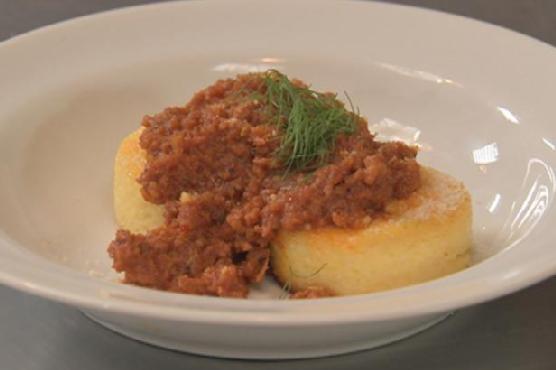
Transfer a few polenta cakes to a plate and top with the sausage sauce.
Sprinkle with more grated Parmigiano.
Place the pork shoulder in a bowl and keep cold until ready to use. Fill a large bowl with ice and place the bowl with the pork shoulder on top.
Season the pork with garlic, salt, fennel seed, crushed red pepper, and coriander.
Mix to combine well.
Grind the pork shoulder twice through a grinding disk with large holes. Grind the meat into the bowl sitting on ice.
Cook a small amount of the meat mixture to test for seasoning.
Add more spices and salt, if needed. Thoroughly mix in a splash of cold water. Allow the seasoned pork to chill on ice or in the fridge before stuffing into the casing.
Replace the grinder attachment with the horn. (Be sure to thoroughly clean the attachment area before proceeding.) Rub oil onto the horn, and then put the casing on, leaving a few inches of slack at the end.
Stuff the casing, tie off the ends, and prick the sausage with a pin or the tip of a knife.